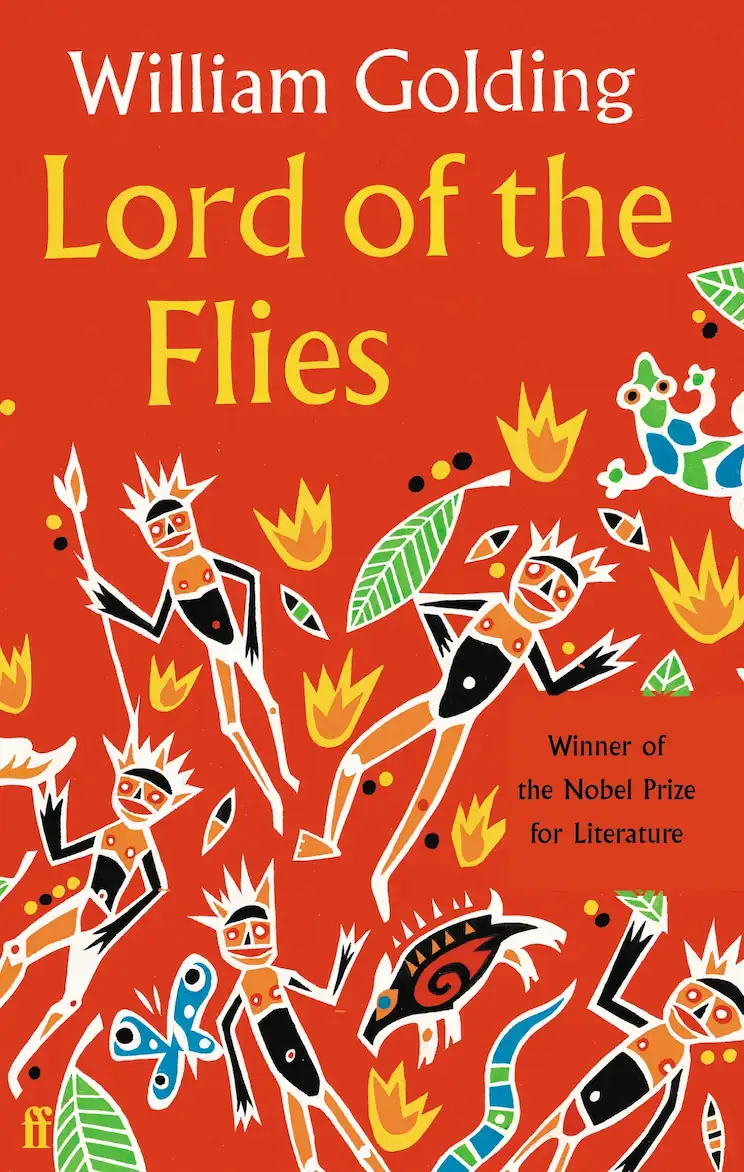
When I picked up this classic by William Golding from a second-hand bookstore, it was an impulse buy and I had no expectations.
The premise intrigued me: a group of English boys find themselves stranded on an island after a plane crash. With no adults to supervise them, they must figure out how to survive and, hopefully, be rescued.
Before diving in, I skimmed through online reviews and found opinions to be quite divided.
Lord of the Flies is widely regarded as a timeless classic, a novel that has endured for generations. However, Golding’s perspective has been challenged by those who argue that his depiction of human nature is overly pessimistic. They point to real-life survival stories where children have banded together, demonstrating resilience and cooperation rather than descending into chaos.
But whether children—or humans in general—are inherently savage is not the main point. That’s what I realized by the very end.
SPOILER ALERT: The boys, at least some of them, get rescued in the end. But when the naval officer arrivies, he’s appaled by the chaos he finds. He expects the English boys to upholad civilization and morality, even in crisis—yet he himself is a participant in the ongoing war. His disappointment in them is laced with irony, proving that so-called “civilized” adults are no different from the children he pities.
And that’s what Lord of the Flies ultimately is—the perfect counter-story to The Coral Island.
Golding, disillusioned by the romanticized tales of stranded English boys heroically rebuilding society, decided to challenge that ideal. Drawing upon his World War II experiences and his time as a teacher, he used the boys in Lord of the Flies to expose the inherent fragility of societal order when authority figures are removed.
Imagine writing a book mocking a growing literary trope, only for your work to become a classic itself.
As someone new to reading literary fiction, I found Golding’s prose somewhat dense. His descriptive passages, while immersive, sometimes slowed the pacing. The transitions to major events also felt abrupt at times, making it harder to follow the narrative flow.
That said, the book clearly conveys Golding’s intent—he knows exactly what he wants to say and steers the story toward that message from the start. Lord of the Flies isn’t just a survival story; it’s a critique of human nature, civilization, and the thin line between order and chaos.
Despite its slower moments, it’s a book that lingers with you long after you’ve turned the final page