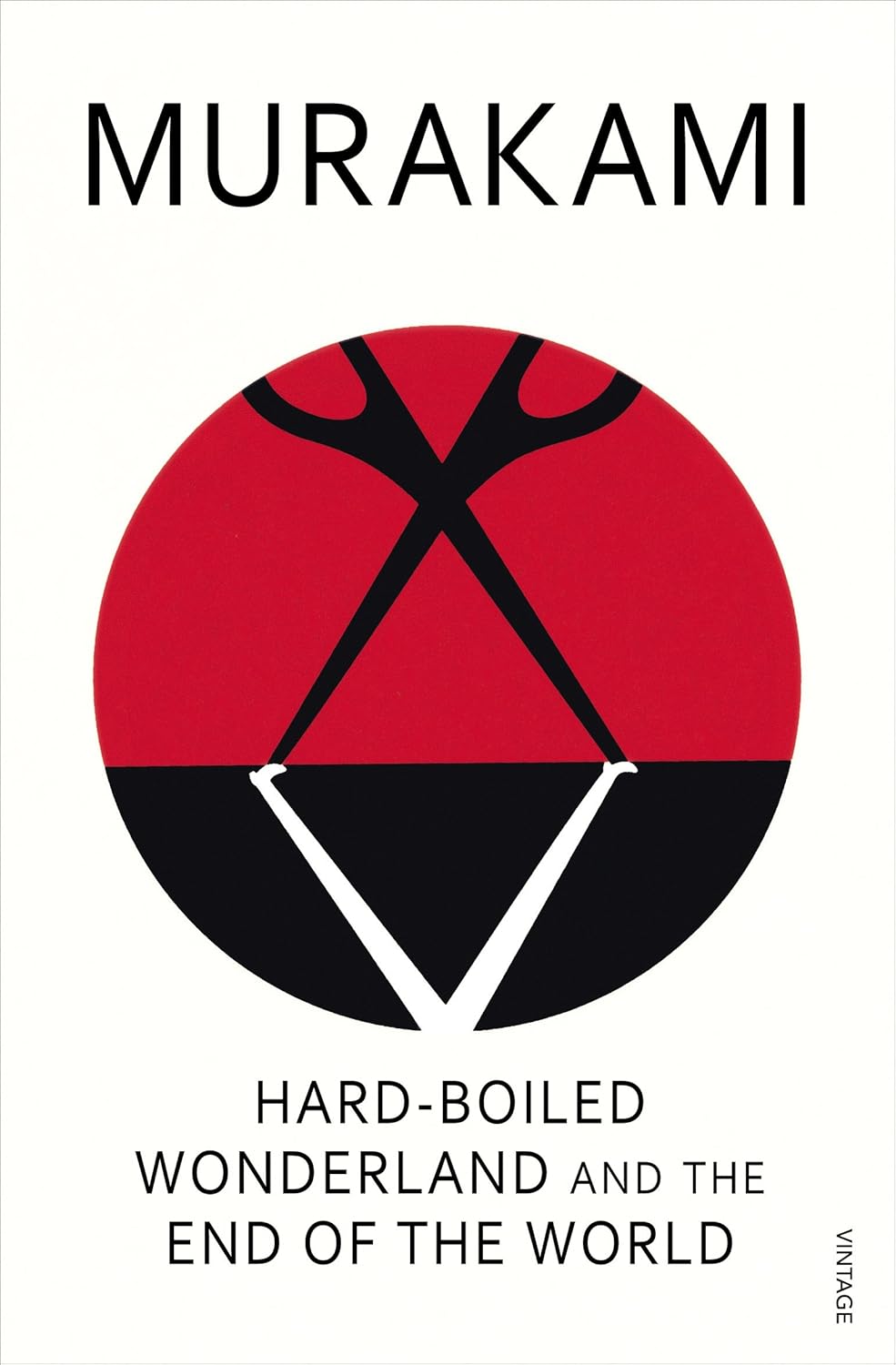
While most readers are introduced to Haruki Murakami through Kafka on the Shore, I chose to delve into the intriguing world of Hard-Boiled Wonderland and the End of the World first.
The unique concept of a cyberpunk-style town and a fantasy world existing in parallel and the potential connection between the two is a fascinating departure from the norm.
The book starts great with the narrator walking up to a secret laboratory of “The Professor” for a mysterious task in the Hard-boiled Wonderland.
The narrator is a Calcutec who works for the System, safeguarding important data from Semiotecs from the Factory through complex data shuffling and encryption that all takes place in his mind.
Every other chapter takes you through the magical town referred to as the Town.
This world is rather simple, populated with beautiful unicorn-like beasts and people without egos and without conflicts, as in the case of the system and factory.
Everyone in this town is assigned a unique job crucial to the harmony of the town’s elements.
The only shady character in this fairyland is the Gatekeeper, tasked to strip off shadows of all newcomers.
The narrator leaves his shadows at the Gatekeeper’s and carries on his new life in the town where he is a dream reader tasked to read old dreams from the fallen beasts.
Murakami skillfully advances the two stories of The Hard-boiled Wonderland and the End of the World in parallel, leaving hints at certain places to make you wonder if the two contrasting worlds are actually related.
It is only towards the end of this 1200-word novel that he genuinely answers the question.
Hard-boiled Wonderland and the End of the World’s ending is both tragic and hopeful, depending on how you interpret it. Throughout the book, the main character goes through a lot of things. However, noone of them is the direct cause of his decisions and aspirations. He is put into different scenarios, even life-threatening, without consultation by people completely strangers to him.
However, in the very last few pages of the book, the narrator truly trusts himself to make a decision concerning his life. He decides against returning to his normal for the prospect of a life with his new-found love, even when all logics point to a future unveiling in a completely different path.